
Most people have seen the results. The driveway that went from gray-black to almost white in an afternoon. The siding that looked like someone replaced it when the crew just cleaned it. The deck that looked like it had another five years in it after one visit.
Fewer people know what actually happened to produce those results, which matters more than most homeowners realize when they are trying to figure out whether they need it, what it should cost, and whether the quote they got from a local company is a reasonable number or not.
Power washing is an exterior cleaning method that uses heated, high-pressure water to remove dirt, grease, mold, algae, and biological buildup from hard surfaces. SUDs Power Washing provides residential power washing and commercial power washing across Pennsylvania using surface-specific methods that adjust pressure, temperature, and cleaning solution based on what each material actually needs. This post covers what those decisions involve and how to evaluate them before you hand anyone a deposit.
In this article:
What Is Power Washing and What Does It Actually Do?
The definition is simple. Everything that follows from it is less simple.
What Does Power Washing Actually Do to a Surface?
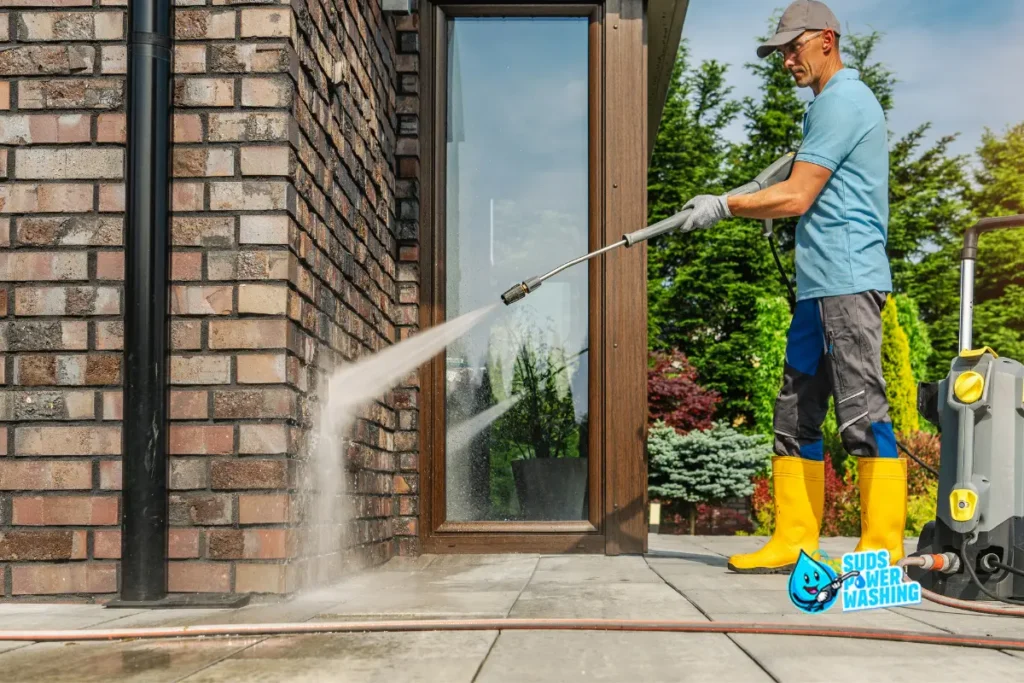
Power washing uses a combination of high water pressure and heated water to break down and remove surface contaminants including dirt, grease, oil, mold, mildew, algae, and biological growth from hard exterior surfaces. The heat is what distinguishes power washing from standard pressure washing: hot water dissolves grease and kills organic growth more effectively than cold water at the same pressure setting.
Picture a concrete driveway that has been collecting oil drips from a parked car for two years, plus the algae that grows in the shaded corner near the foundation every spring. Cold high-pressure water moves the algae around. It also moves some of the oil. Heated water at the same pressure breaks down the oil at the molecular level and kills the algae rather than redistributing it. The surface afterward is not just visually different. The biological material is actually dead rather than temporarily displaced.
That distinction matters because displaced algae and mold come back faster than material that has been killed by heat and cleaning solution. A power washing services job that uses the right temperature for the surface type is not just cleaner immediately after the job. It stays cleaner longer.
What Is the Difference Between Power Washing and Pressure Washing?
Power washing uses heated water. Pressure washing uses cold or ambient-temperature water at high pressure. For most hard surfaces the practical difference in result is small. For surfaces with grease stains or active biological growth, the heat makes a measurable difference in how thoroughly the contaminant is removed.
Neither of these is the right method for every surface, and that is where most DIY damage happens. Roofs, painted wood siding, older vinyl, and wood decks cannot handle high-pressure water regardless of temperature. The correct method for those surfaces is soft washing: lower pressure, longer dwell time with a cleaning solution that does the work chemically rather than mechanically. The post on soft washing vs. pressure washing covers the comparison in full detail for anyone who wants to understand the distinction before calling anyone.
The short version: the right method is determined by the surface, not by the homeowner’s preference or the equipment the crew happens to have on the truck. A company that uses one method on everything is making that decision for the wrong reason.
What Surfaces Can Power Washing Be Used On?
Power washing is appropriate for hard, durable surfaces: concrete driveways, brick, stone, and masonry. Softer surfaces including wood decks, roof shingles, painted wood siding, and vinyl require lower pressure or soft washing methods to avoid damage. Using the wrong method on the wrong surface is the most common cause of power washing damage on residential properties.
Driveway and concrete cleaning handles the highest-pressure work because concrete can take it. Deck cleaning requires a lower pressure and a wider spray pattern to avoid raising the wood grain. Vinyl siding cleaning requires attention to nozzle angle because the wrong angle forces water behind the lap joints and into the wall cavity. Roof cleaning is never a high-pressure job: shingles lose granules under high pressure and the lifespan of the roof shortens every time the wrong method is applied to it.
The time of year matters too. The existing post on when is the best time to pressure wash your house covers the seasonal considerations that affect both the result quality and how long the clean lasts.
How Much Does Power Washing Cost in Pennsylvania?
This is the question that brings more homeowners to this post than any other, and the honest answer is that it depends on four things: the surface type, the square footage, how long the buildup has been sitting there, and whether pre-treatment is needed before the main wash pass.
What Does Power Washing Typically Cost in Pennsylvania in 2026?
Power washing costs in Pennsylvania typically range from $100 to $500 for a standard residential job depending on the surface type, square footage, and level of buildup. A driveway runs lower than a full house exterior. A roof soft wash typically runs higher than a fence or patio cleaning.
Here is the surface-by-surface picture. A single-car driveway with normal dirt and some algae near the edges sits in the lower end of that range. A full house exterior wash covering two stories of siding moves toward the middle and upper end depending on the square footage and what is growing on the north face. Fence cleaning for a standard residential fence line is typically the lowest-cost surface job on any property. A roof soft wash is the highest, partly because of the method complexity and partly because of the access and liability involved in working on a roof surface.
What pushes any of these numbers higher is time. Buildup that has been sitting on a concrete driveway for four seasons is harder to remove than buildup from the last eight months. Algae on siding that has penetrated past the surface layer requires longer dwell time with cleaning solution, which adds labor time, which adds cost. The homeowner who gets the property cleaned on a regular cycle pays less per visit than the one who defers it for years and then wonders why the quote is higher than expected.
How Do You Price a Power Washing Job? What Factors Actually Drive the Cost?
Power washing jobs are priced on four main factors: surface type and the method it requires, total square footage, the level of buildup including biological growth and staining, and whether pre-treatment is needed before the main wash.
A useful way to think about the range: the lowest-cost job is a single flat concrete surface with light dirt buildup, good access, no oil staining, and no biological growth. That is the job that takes the least time, the simplest equipment setup, and the fewest passes. The highest-cost residential job is a full house exterior with two or more years of algae growth on north-facing surfaces, a wood deck that needs a separate softer pass, and possibly a roof that needs soft washing as a separate line item.
Most residential jobs in Pennsylvania fall somewhere between those two scenarios. Many homeowners also add gutter cleaning to a house wash because the wash pushes debris toward the gutters, and leaving those uncleaned after the exterior is done creates the next problem before the truck even leaves the property.
Should You DIY or Hire a Professional Power Washer in PA?
When Does DIY Power Washing Actually Make Sense?
DIY power washing makes sense for small, flat concrete surfaces with light dirt buildup and no oil staining, where a consumer-grade pressure washer can produce an acceptable result without significant risk of surface damage. For anything involving a roof, wood decking, vinyl siding, or any surface taller than a single story, the risk of DIY damage typically exceeds whatever money the equipment rental saves.
The math changes depending on the job. Renting a consumer-grade pressure washer for a single concrete patio is a reasonable afternoon project for someone who knows to stay off the wood surface nearby and understands that the driveway extension crack runs deeper than the pressure is going to fix. That same equipment and that same level of knowledge pointed at a wood deck is how deck boards get splintered and grain gets raised in patterns that no stain will hide the following spring.
The post on 5 common power washing mistakes is worth reading before any DIY attempt. Not because it is trying to talk anyone out of it, but because the mistakes in that post are the ones that are genuinely easy to make the first time and genuinely expensive to fix afterward.
When Is Hiring a Professional Power Washer the Right Call?
Hiring a professional power washer is the right call when the surface requires soft washing rather than high pressure, when the total area is larger than a few hundred square feet, when biological growth has been present for more than one season, or when the property is being prepared for painting, staining, or sale.
The case for professional service is straightforward on any of those conditions. Soft washing requires the right cleaning chemistry and the right dwell time, neither of which a consumer rental gives you. A larger area means more passes, more variables, and more opportunity for an uneven result that is visible in the finished surface. Growth that has been sitting for multiple seasons needs pre-treatment that goes on before the water does and requires knowledge of what concentration is appropriate for the surface.
The case for professional service before a sale is partly practical and partly financial. As covered in the post on how regular power washing protects your home’s value, a clean exterior changes how a property reads to a buyer before they get out of the car. The cost of professional service in that context is not a cleaning expense. It is a presentation investment with a real return.
What to Do With Everything You Just Learned
Knowing what power washing actually involves puts you in a better position before any conversation with any company. You know which surfaces need which method. You know what drives a quote higher or lower. You know what the DIY decision actually costs when you account for the realistic risk on each surface type.
SUDs handles window cleaning and gutter cleaning alongside power washing for homeowners who want the full exterior addressed in one visit rather than scheduling two separate companies.
Before service day, the post on how to prep for power wash day covers everything the property needs before the crew arrives. When you are ready for a quote, get one from SUDs Power Washing and see what a complete surface-specific scope actually looks like before you commit to anything.