
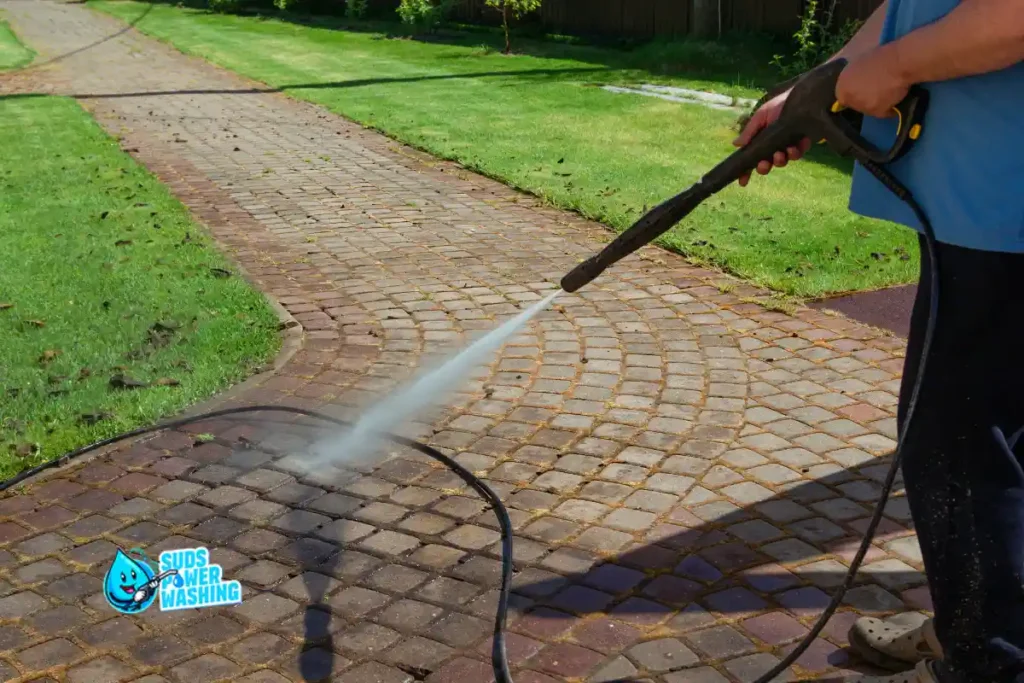
SUDs Power Washing provides residential power washing services across Pennsylvania, covering driveways, vinyl siding, wood and composite decking, fences, patios, pool decks, roof cleaning, and walkways for homeowners who want a clean property without the risk of doing it wrong themselves. Residential power washing done correctly restores surfaces and extends their life; done at the wrong pressure or with the wrong technique on the wrong surface, it can strip paint, etch concrete, and damage wood grain in ways that cost significantly more to fix than the original cleaning job.
Spring arrives and the motivation finally kicks in. The driveway looks like something grew on it over winter. The siding is doing that greenish-grey thing it does after a cold, wet few months. The deck has gone from warm wood tones to the colour of an old dock. You have been putting this off because power washing sounds like exactly the kind of Saturday afternoon project you will start enthusiastically and finish with a damaged fence and a sore back.
That is the whole reason the URL for this company is what it is. The name acknowledges the thing everyone knows about power washing: it is genuinely unpleasant to do yourself, and it is genuinely easy to get wrong. This guide covers the part most contractors do not tell you before they show up: which surfaces need what approach, what you need to do before the crew arrives, and what to ask any residential power washing service before you hand anyone a deposit.
In this article:
Which surfaces on your property can be safely power washed and which ones cannot?
Concrete driveways, brick pavers, and vinyl siding are the most forgiving surfaces for residential power washing in Pennsylvania when the right pressure and technique are applied. Wood decking, wood siding, composite decking, and roofing surfaces require soft washing or significantly lower pressure to avoid surface damage, and some surfaces including older painted wood and certain composite materials should never be power washed at standard residential pressure.
This is where most homeowners make the assumption that gets them in trouble. Power washing seems like a single thing: a machine, a wand, some water pressure and the assumption is that if it works on the driveway, it probably works on everything else with the same settings. It does not. The difference between cleaning a concrete driveway and cleaning a cedar deck is not just the surface. It is a completely different tool approach, and getting it wrong on wood does not just mean it is not clean. It means it is damaged in a way that cannot be undone without sanding and refinishing.
Driveways and concrete surfaces
Driveways and concrete surfaces are the most forgiving category in residential power washing for a straightforward reason: concrete is dense enough to handle significant water pressure without surface damage when the technique is right. The common mistake on concrete is skipping the pre-treatment step. Oil stains, algae, and mildew on concrete need a specific detergent applied and allowed to dwell before pressure is applied. Pressure alone without a surfactant on organic staining mostly spreads the problem rather than removing it. Doing it in the right order produces a surface that looks genuinely clean rather than just wet.
Vinyl siding
Vinyl siding is safe for residential power washing at the right pressure applied at the right angle, and the angle part is what most DIY attempts get wrong. Washing up into vinyl siding rather than downward forces water behind the panels, which can work its way into the sheathing and insulation underneath. That moisture damage does not show up immediately. It shows up as staining and soft wall areas months later, after the pressure washer is long returned to the rental place. Downward angle, appropriate pressure, and keeping the nozzle moving rather than stopping on any single point are the three technique requirements that make vinyl siding safe to wash.
Wood decking and wood siding
Wood decking and wood siding are where the most residential power washing mistakes happen in Pennsylvania, and both surfaces have the same underlying vulnerability. When pressure is too high on wood, it opens the fibre structure of the surface in a process called grain raising. In plain terms: the wood gets rougher, not smoother. That rough texture then holds dirt and moisture more readily than the original surface, which means the surface looks worse faster after a high-pressure wash than it would have if left alone. Soft washing, which uses lower pressure and appropriate cleaning solutions rather than force, is the right approach for wood. It is not a compromise. It is the technique that actually works on the material.
Composite decking
Composite decking is not the same as wood, but it also has limits that vary significantly by product. Some composite materials handle low-pressure washing without any issue. Others are specifically contra-indicated by the manufacturer for standard residential power washing pressure, and using it voids any surface warranty. The right answer for composite is to check the manufacturer’s care guidelines for your specific product before anyone points a wand at it. If those guidelines are not accessible, soft washing at the lowest effective pressure is the safe default.
Roofing surfaces
Roof cleaning is the category where standard pressure washing causes the most consistent damage on residential properties. Asphalt shingles have a granular coating that provides UV protection and structural integrity. High-pressure water strips those granules, shortening the effective lifespan of the roof by years per cleaning if done incorrectly. Soft washing with appropriate roof-safe cleaning solutions is the correct method for most residential roof types, and the soft washing process removes algae, moss, and biological growth at the chemistry level rather than the force level. That is not a lesser result. On roofing, it is a better one.
According to the Family Handyman pressure washing guide, the most common residential power washing mistakes involve using too high a PSI on wood and painted surfaces. Professional residential power washing services that differentiate by surface type before arriving are addressing exactly the failure modes that guide documents.
What should you actually do to prepare before a residential power washing crew arrives?
Before a residential power washing crew arrives, Pennsylvania homeowners should move patio furniture and outdoor items away from work areas, close all windows and doors, disconnect and move garden hoses, let the crew know about any fragile planters or surfaces of concern, and point out any prior damage or repairs before the job starts. These steps take about twenty minutes and significantly reduce the chance of anything going wrong during the job.
Most homeowners assume booking is the end of the process on their side. It is not quite. The prep steps below are not complicated, but skipping them is reliably the source of the most common post-service complaints about residential power washing.
1. Move outdoor furniture, planters, and decorative items away from cleaning areas
Water at cleaning pressure can chip ceramic planters, strip finishes from furniture, and knock over lightweight items. A crew that is working around things on the patio is also a crew that is not cleaning the surface underneath them. Moving items before the crew arrives gets a better result across the full surface area and keeps things you care about out of the line of fire.
2. Close all windows, doors, and any exterior vents
Even at appropriate residential distances, cleaning spray can enter gaps around windows and door frames. Close everything before the crew arrives, not after they start. If you have wall-mounted outdoor speakers, light fixtures, or exterior electrical outlets near the surfaces being cleaned, point those out during the initial walkthrough.
3. Disconnect and move garden hoses
The crew will likely need access to your outdoor water supply. Having hoses coiled and out of the way, and knowing which spigot is available for equipment hookup, saves time at the start of the job. It also prevents hose damage from cleaning equipment moving through the work area.
4. Point out any prior damage or fragile areas before work starts
A cracked section of concrete that is already separating, a section of vinyl siding that has a loose clip, a previously patched area of decking, these are places where the crew should reduce pressure or avoid entirely. You know where they are. The crew does not unless you tell them before the job begins. A two-minute walkthrough at the start prevents the conversation about existing damage that sometimes happens at the end.
Consider combining a residential power washing visit with a gutter cleaning appointment if your gutters are overdue, since both services work well together and the water from cleaning drains more effectively from clear gutters.
What questions should you ask any residential power washing service before booking in 2026?
Before booking any residential power washing service near you in Pennsylvania, ask five specific questions: what pressure settings they use for each surface type on your property, whether they carry liability insurance, what cleaning solutions they apply and whether those are plant-safe, how they handle accidental surface damage, and whether they offer a satisfaction guarantee or return visit if results are not as expected. A power washing company that cannot answer these questions with specifics is one worth replacing with a company that can.
What specific questions reveal whether a contractor actually knows what they are doing?
Start with the surface question. Ask directly what approach they use for your wood deck versus your concrete driveway versus your vinyl siding. A contractor who has one answer for every surface on your property is a contractor who does not differentiate by material, and the surface-type breakdown earlier in this article explains why that matters. The right answer involves specific technique adjustments. If they cannot explain those in plain English, that tells you something important about their process.
Ask about insurance next. Residential power washing can cause property damage broken windows, stripped paint, etched concrete, damaged composite and a contractor without adequate liability coverage leaves you absorbing that cost. Ask for the certificate. Any legitimate professional contractor hands it over without hesitation.
Ask about cleaning solutions specifically. Chemical runoff from power washing detergents can damage garden plants, lawn grass, and landscaping around a Pennsylvania home. Biodegradable, plant-safe cleaning solutions are available and are the standard for any contractor who has thought about the full impact of their work on your property. If they cannot name what they use, they have not thought about it.
Finally, ask what happens if something gets damaged during the job. This question produces more useful information than almost any other in the contractor evaluation process. A clear, direct answer about their documentation and resolution process reflects a contractor who has managed this before. Vagueness or a pivot to “we’re very careful” is the reliable warning sign.
Why does SUDs describe itself as “I Hate Power Washing” and what does that mean for homeowners?
The name is an honest acknowledgment that power washing is an annoying, wet, time-consuming job that most homeowners consistently put off and consistently get wrong when they try to do it themselves. The URL at ihatepowerwashing.com is not self-deprecating about the quality of the work. It is self-aware about the experience of power washing from the homeowner’s side, and it exists because SUDs believes that the contractor who admits power washing is genuinely unpleasant to deal with is the contractor worth trusting to handle it correctly.
The full range of residential power washing services SUDs provides across Pennsylvania is on the services page. If you know which surfaces need attention and want a quote from a team that knows the difference between soft washing a roof and pressure washing a driveway, that is where the conversation starts.
You have been looking at that driveway, that deck, that siding for long enough. The surfaces are not going to clean themselves, and renting a pressure washer and spending a Saturday doing it wrong is not actually on your agenda.
SUDs Power Washing covers residential power washing services across Pennsylvania with surface-appropriate technique and plant-safe cleaning solutions. Get a free quote at ihatepowerwashing.com/services/residential/ and let someone who genuinely understands the difference between surfaces handle the part everyone hates.