
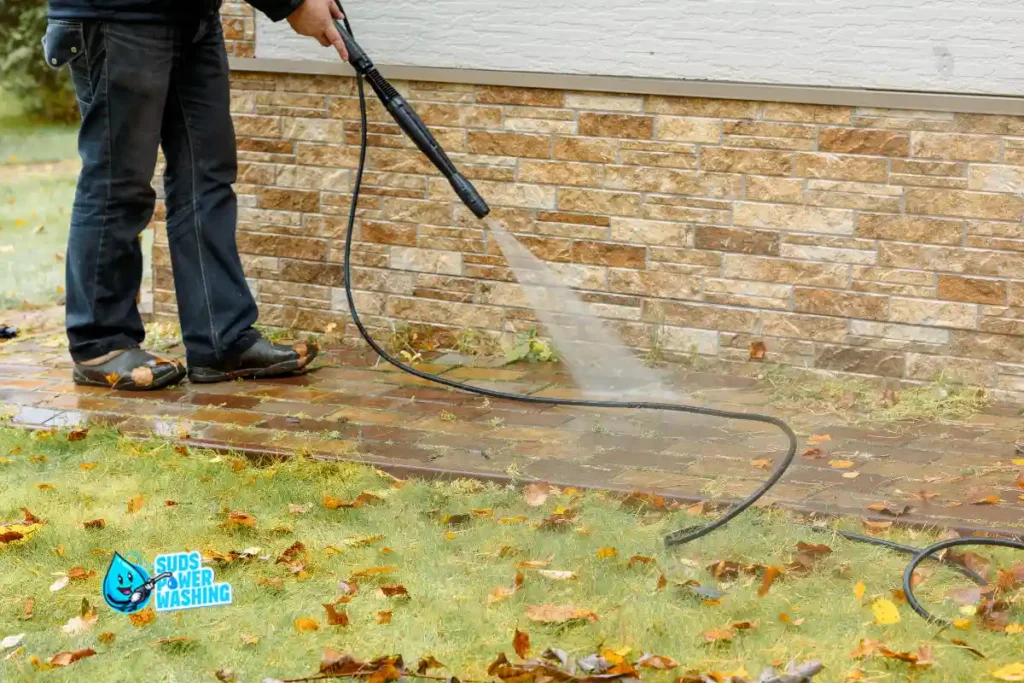
SUDS Power Washing provides power washing near me across Pennsylvania, covering driveways, vinyl siding, wood and composite decking, fences, patios, pool decks, roof cleaning, walkways, and gutters for homeowners who want a clean exterior without spending their Saturday doing it wrong on a rented machine. Power washing near me in Pennsylvania is not a single uniform service it is a set of surface-specific approaches that look similar from the street but produce very different results depending on whether the company applying them understands that concrete, wood, siding, and roofing are not the same job at the same pressure settings.
Spring arrives, or the house is going on the market, or the driveway has been accumulating a winter’s worth of grime and the decision has finally been made: this is getting handled by someone who actually knows what they are doing. You typed “power washing near me” and landed here. The name on the URL is “I hate power washing.”
That either makes immediate sense or raises a question that the next few sections will answer.
In this article:
What surfaces does SUDS Power Washing near me in Pennsylvania cover and what makes each one different?
SUDS Power Washing covers driveways and concrete, vinyl siding, wood decking, composite decking, fences, patios, pool decks, walkways, roof cleaning, and gutter cleaning across Pennsylvania with surface-appropriate pressure and technique for each. Concrete can handle high pressure; wood and roofing surfaces require lower pressure or soft washing to avoid damage that costs significantly more to fix than the cleaning job itself.
The surface-type distinction is the piece of information most power washing companies do not explain before booking and most homeowners do not know to ask about. It is also the piece that most directly determines whether you end up with a clean property or an expensive repair. Here is what each major surface category actually involves.
Driveways and concrete: the most forgiving surface for power washing
Driveways and concrete surfaces are where standard high-pressure power washing is most appropriate. Concrete is a dense, non-porous material that handles significant water force without damage when the technique is correct. The most common mistake on concrete is skipping the pre-treatment step for oil stains and algae water pressure alone mostly relocates organic staining rather than removing it.
The right sequence is surfactant applied first, dwell time, then pressure rinse. That produces a surface that is genuinely clean rather than just wet.
Vinyl siding: angle matters more than pressure
Vinyl siding is safe for power washing at the right pressure applied at the right angle, and the angle is what most DIY attempts get wrong. Washing up into vinyl siding forces water behind the panels rather than cleaning them, directing moisture into the wall cavity and insulation below. That damage does not show up immediately. It appears as staining and softness months later.
Downward angle, appropriate pressure, and a moving wand rather than a stationary one are the three technique requirements that make vinyl siding safe to wash.
Wood decking and wood siding: where most power washing mistakes happen
Wood decking and wood siding are the surface categories with the highest rate of damage from incorrect power washing, and both have the same underlying vulnerability. Too much pressure raises the grain it opens the fibre structure of the wood surface, creating a rougher texture that holds dirt and moisture more readily than the original smooth surface. That rougher surface then looks worse faster than it would have with no cleaning at all.
Soft washing, which uses lower pressure and appropriate cleaning chemistry, is the correct approach for wood. It is not a compromise. It is the right tool for the material.
Roof cleaning: soft washing only, no exceptions
Roof cleaning is the surface category where standard power washing pressure causes the most consistent damage. Asphalt shingles have a protective granule coating that provides UV protection and structural integrity to the shingle layer beneath. High-pressure water strips those granules, shortening the functional lifespan of the roof by years per cleaning event when done at the wrong pressure.
Soft washing with roof-safe cleaning chemistry removes the algae and biological growth that causes the dark streaking on most Pennsylvania roofs without applying any of the force that causes that granule loss.
Composite decking, fences, patios, and pool decks
Composite decking has manufacturer-specific pressure limitations that vary significantly by product some composites handle low-pressure washing well, others are explicitly contra-indicated for standard power washing pressure, and using it voids the surface warranty. Fences need an approach matched to their material. Patios and pool decks often combine multiple surface types in a single area, each with its own appropriate technique.
According to the Family Handyman pressure washing guide, the most common mistakes in residential power washing involve applying too much pressure to wood and painted surfaces without adjusting for the material. Professional services that differentiate by surface type before arriving are specifically addressing the failure modes that guide documents.
What should you do to prepare before a power washing crew arrives and what should you expect on the day?
Before a SUDS Power Washing crew arrives, move outdoor furniture and planters from the surfaces being cleaned, close all windows and doors, disconnect garden hoses, and let the crew know about any prior surface damage or areas of concern during the walkthrough before work begins. On the day, most residential jobs are completed in a few hours depending on the surface mix and total area, and the crew handles equipment setup, pre-treatment where needed, cleaning, rinsing, and cleanup before leaving the property.
Most homeowners assume that booking a power washing service is entirely hands-off on their end once the appointment is scheduled. It is close to that, but the prep steps below take about twenty minutes and are directly responsible for most of the difference between a great result and a mediocre one.
1. Move outdoor furniture, planters, and decorative items
Water at cleaning pressure can chip ceramic planters, strip finishes from outdoor furniture, and knock over lightweight decorative items. A crew that is working around things on the patio is also a crew that cannot clean the surface underneath them properly. Moving items before the crew arrives takes less time than it sounds and produces a noticeably better result across the full surface area.
2. Close all windows, doors, and exterior vents
Cleaning spray at appropriate pressure can enter gaps around window frames and door seals this is not a rare edge case, it happens regularly when windows are left open or cracked during a power washing job. Wall-mounted outdoor speakers, light fixtures, and electrical outlets near the cleaning surfaces should be covered or pointed out during the pre-job walkthrough so the crew can work around them.
3. Point out prior damage or areas of concern before work starts
A cracked section of concrete, a loose siding panel, a previously patched deck board, or a fragile garden feature near the cleaning area these are places the crew should reduce pressure or avoid. The homeowner knows where they are. The crew does not unless told before the job begins.
A two-minute walkthrough before the equipment comes out prevents the conversation about existing damage that sometimes happens at the end of a job.
4. What the day actually looks like
The crew sets up equipment, assesses the surfaces in person, applies pre-treatment solution where needed, completes the cleaning pass at the surface-appropriate pressure, rinses thoroughly, and clears any debris from the work area before leaving. The homeowner does not need to be present during the work but being reachable by phone is useful in case something unexpected comes up during the job. Most residential power washing jobs in Pennsylvania are complete within a few hours.
Consider combining a power washing visit with gutter cleaning if your gutters are also overdue both services work well together in a single visit.
What questions should you ask any power washing near me before you book in 2026?
Before booking any power washing near me in Pennsylvania, ask five questions: what pressure settings they use for each surface type on your property, whether they carry liability insurance, what cleaning solutions they apply and whether those are plant-safe, how they handle accidental surface damage, and whether they can provide a written scope or quote breakdown before work begins. A power washing company that cannot answer any of these questions specifically is one worth replacing with one that can.
1. What pressure settings do you use for each surface on my property?
A company with one answer for every surface on your property is a company that has not thought carefully about surface-specific damage risk. The right answer involves distinct approaches for wood versus concrete versus vinyl versus roofing and a company that can explain those differences in plain English has demonstrably done each of them before.
2. Do you carry liability insurance for property damage?
Power washing can cause damage to windows, painted surfaces, wood grain, and shingle granules when done incorrectly, and a company without adequate liability insurance leaves the homeowner absorbing the cost of that outcome. Ask for the certificate. A legitimate operator hands it over without hesitation.
3. Are your cleaning solutions safe for my plants and landscaping?
Chemical runoff from cleaning solutions can damage grass, garden plants, and landscaping if the solutions are not plant-safe and the runoff is not directed appropriately. Biodegradable and plant-safe cleaning solutions are available and are the standard for any operator who has considered the full impact of their work on the surrounding property.
4. What happens if something is accidentally damaged during the job?
How a company answers this question reveals more about how they operate than almost any other. A clear, straightforward description of their process for documenting and addressing accidental damage reflects a company that has managed this before and has a process for it. Vagueness or a pivot to “we’re very careful” is the reliable warning sign in this conversation.
Why does SUDs call itself “I Hate Power Washing” and what does that mean for the homeowner?
The name is the honest acknowledgment of something most homeowners already know: power washing is a genuinely unpleasant, wet, and time-consuming job that most people consistently avoid until it becomes unavoidable, and consistently get wrong when they finally attempt it themselves. The URL is not self-deprecating about the quality of the work. It exists because the company believes the homeowner who is honest about not wanting to spend their Saturday doing this deserves a service that is equally honest about what the job involves and how to do it correctly.
The power washing services page covers the full scope of what a SUDs service visit includes, and commercial power washing services are available for business properties and property managers who need the same surface-specific approach at a larger scale. Window cleaning is also available as an add-on for homeowners who want the full exterior addressed in a single visit.
The Job You Have Been Putting Off Has a Company That Gets It
You have been meaning to get this done for a while. The article confirmed that the surfaces on your property need different approaches, gave you the prep checklist that gets the best result, and gave you the questions that separate a good power washing company from one that treats every surface the same.
SUDs Power Washing covers driveways, siding, decking, fences, roofing, and more across Pennsylvania with surface-appropriate technique and plant-safe cleaning solutions. Get a free power washing quote and find out what your specific property actually needs.