
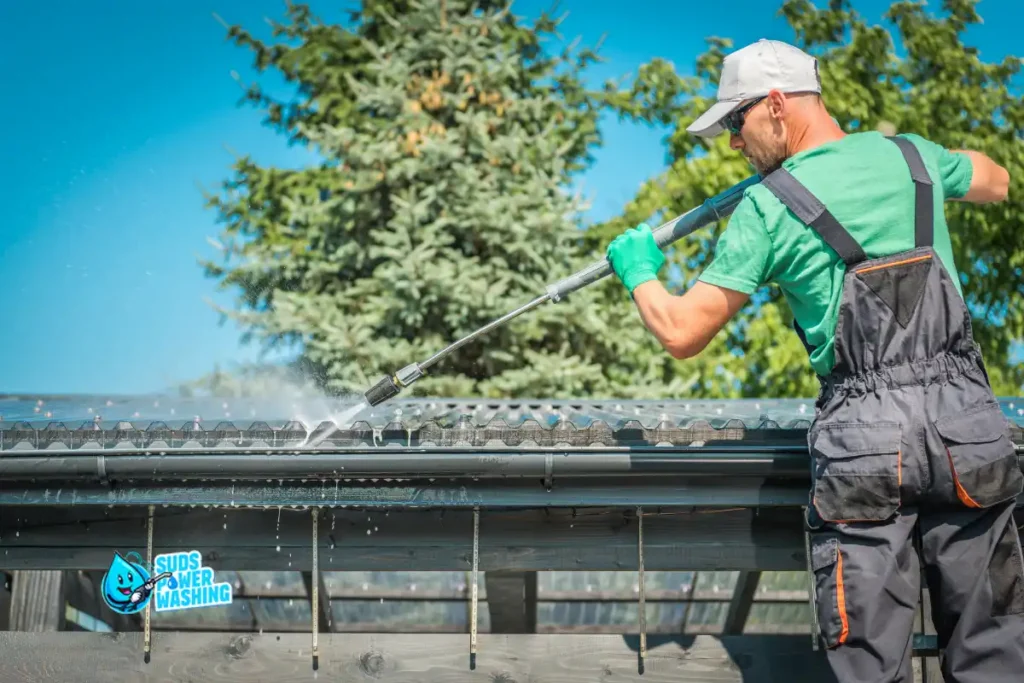
SUDs Power Washing provides soft washing services across Pennsylvania, applying biodegradable low-pressure cleaning solutions to siding, roofing, wood surfaces, stucco, and composite materials for homeowners who need organic growth and grime removed without the surface damage that standard pressure washing causes on these materials. Soft washing in Pennsylvania in 2026 is not a lesser version of power washing; it is the correct method for a specific and significant category of exterior surfaces where high-pressure water damages the material rather than cleaning it.
Most homeowners arrive at soft washing through one of two routes. Either they watched a pressure washing disaster clip online and started looking for the alternative, or they had a contractor apply the wrong method to the wrong surface and are now doing the research they should have done before booking the first time. The siding that blistered, the roof that lost granules, the wood deck that came out rougher than before all of these outcomes follow from applying force to a surface that needed chemistry instead. This article explains the distinction, identifies the surfaces where it applies, and walks through what the service actually looks like.
In this article:
What is soft washing and how does it actually work differently from power washing?
Soft washing uses biodegradable cleaning solutions applied at low pressure to break down algae, mold, mildew, and organic growth at the root level letting the chemistry do the removal work rather than relying on water force to scrub the surface. The low pressure, typically similar to a garden hose, means the cleaning solution can be applied safely to surfaces that standard pressure washing would damage, including asphalt shingles, painted siding, stucco, and wood.
The pressure in soft washing is delivery pressure, not cleaning pressure. This is the distinction that most descriptions of soft washing fail to make clearly, and it is what makes “low pressure” sound like a limitation when it is actually a design feature. The solution is what cleans. The water delivers it to the surface and then rinses it away. High pressure is not needed because it was never doing the cleaning work the chemistry was. On surfaces where high pressure is genuinely safe, power washing is the right tool. On surfaces where it is not, soft washing produces a better outcome regardless.
How the cleaning chemistry actually works
The biodegradable cleaning solution used in soft washing targets the cellular structure of algae, mold, and mildew. Rather than rinsing the visible surface layer of biological growth, the chemistry breaks it down at the root level the part that is embedded in porous surfaces like asphalt, stucco, and wood. Growth that is killed at the root does not regrow in a matter of weeks the way surface-rinsed growth does. This is the mechanism behind one of soft washing’s most practically important advantages: the result holds significantly longer than pressure washing on the same surface because the biology has been addressed rather than displaced.
Why low pressure is the correct approach, not the limiting factor
The perception that soft washing is “weaker” than pressure washing misunderstands which variable is doing the cleaning work. In pressure washing, force is the primary cleaning mechanism. Water at high pressure physically dislodges contamination from the surface. In soft washing, chemistry is the primary cleaning mechanism. The water pressure is high enough to deliver the solution and low enough to be safe on fragile surfaces. On surfaces that cannot tolerate high pressure without damage, soft washing does not produce a lesser result. It produces the only result that does not come with a repair bill attached.
Soft washing versus power washing: the comparison that matters
Standard power washing services are appropriate for hard, dense surfaces, concrete driveways, brick, masonry where the material can absorb significant water pressure without surface damage. Soft washing is the correct approach for roofing, siding, wood, stucco, and composite surfaces where that pressure threshold would cause the kind of damage that the Family Handyman pressure washing guide documents as the most common professional power washing mistake. Neither method is universally superior. The right method is the one that matches the surface.
Which surfaces on your Pennsylvania property need soft washing instead of standard power washing?
In Pennsylvania, soft washing is the correct method for asphalt shingle roofing, painted and unpainted wood siding, vinyl siding, stucco, composite and wood decking, and any exterior painted surface where high-pressure water would lift paint, raise wood grain, or strip protective surface coatings. Concrete driveways, brick, and masonry typically handle pressure washing without surface damage and do not require soft washing.
This surface-by-surface distinction is where most of the value in soft washing knowledge lives for a homeowner. Knowing that your driveway and your roof are not the same job with the same technique is the difference between booking a contractor who treats them correctly and one who treats everything at the same setting.
Roofing: the most important soft washing application
The dark streaking on most Pennsylvania asphalt roofs is Gloeocapsa magma, an algae species that feeds on the limestone filler in asphalt shingles. Standard pressure washing removes the visible streaking by stripping the protective granule layer from the shingles along with it shortening the roof’s functional lifespan every time it is cleaned incorrectly. Soft washing kills the algae at the root with appropriate chemistry, rinses the dead growth cleanly, and leaves the granule layer fully intact. Our roof cleaning page covers what the service involves specifically for Pennsylvania residential roofing and why the Asphalt Roofing Manufacturers Association specifically recommends low-pressure cleaning methods for asphalt shingles.
Vinyl siding: the angle and the solution both matter
Vinyl siding is cleaned more effectively with soft washing than with pressure washing for a straightforward reason. The combination of a biodegradable cleaning solution and low pressure removes biological growth and organic staining without the risk of forcing water behind the panels at an incorrect angle or causing surface cracking from excessive pressure. Soft washing on vinyl produces a surface that stays cleaner longer because the solution addresses the biological root cause rather than rinsing the current surface appearance of it.
Wood siding and wood decking: where pressure washing causes the most damage
Wood siding and wood decking are the surface categories with the highest rate of documented damage from incorrect pressure washing. High pressure raises the grain of wood it opens the fibre structure of the surface, creating a rougher texture that holds dirt and moisture more readily than the original smooth surface. That rougher surface then deteriorates faster and looks worse sooner than it would have without any cleaning. Soft washing removes biological growth and organic staining from wood without any of this grain-raising risk, preserving the surface while still producing a genuinely clean result.
Stucco, painted surfaces, and composite materials
Stucco cracks under direct high-pressure water impact, particularly on older applications where the material has become more brittle. Painted exterior surfaces can blister and lift when high-pressure water forces its way under the paint film. Composite decking has manufacturer-specific pressure limitations that vary significantly by product. All three are consistently better served by soft washing, which removes biological growth and organic contamination without the mechanical force that causes these surface failures.
What does a professional soft washing service visit look like and how long do results last?
A soft washing service visit from SUDs Power Washing in Pennsylvania starts with a surface assessment to confirm the correct cleaning solution and concentration for the specific growth type present, followed by low-pressure application of the solution, an appropriate dwell time for the chemistry to work at the root level, and a thorough low-pressure rinse to remove the dead growth and any solution residue. Results on roofing surfaces typically last two to three years before biological growth becomes visible again; results on siding and wood surfaces hold comparably longer than standard pressure washing on the same materials.
The process is slower than a pressure washing job on a comparable surface area because the dwell time is where the result is actually produced. Rushing the dwell period creates a surface that looks clean immediately after the rinse and begins showing regrowth within weeks, which is the outcome most homeowners associate with a bad soft washing job when the reality is a rushed one.
Assessment: matching the solution to the surface and the growth
Different biological growth types and different surface materials require different cleaning solution concentrations. Algae on asphalt shingles responds to a different approach than mildew on vinyl siding or moss on stucco. A crew that applies the same solution at the same concentration to every surface is not conducting a soft washing assessment; they are performing a blanket application that may produce inconsistent results across the different surfaces in the project scope. The assessment before application is what makes the outcome predictable.
Application, dwell time, and rinse: the three-step sequence that matters
The solution is applied at low pressure across the full treatment area. The dwell period allows the chemistry to break down biological growth at the cellular level typically ten to thirty minutes depending on the growth density and the specific surface. The rinse follows at low pressure, removing both the dead biological material and the cleaning solution residue. A thorough crew also confirms that rinse water has drained away from adjacent plantings and garden beds before leaving the property.
How long do soft washing results last compared to pressure washing?
On Pennsylvania roofs, soft washing results typically hold for two to three years before biological growth regrowth becomes visible, depending on the level of tree shade and ambient humidity at the specific address. On vinyl siding and composite surfaces, the result holds at least as long as pressure washing would on a comparable surface in terms of visible cleanliness, with the additional advantage of no surface damage risk during the cleaning. On wood decking and wood siding, the result holds longer than pressure washing specifically because the grain has not been raised a roughened wood grain surface holds dirt and moisture more readily and requires more frequent attention as a result.
How do I book a soft washing service near me in Pennsylvania through SUDs?
The fastest way to book a soft washing service near you through SUDs is to visit the soft washing services page, describe the surface type and your general location, and receive a free quote. For homeowners adding residential service across multiple surfaces, soft washing for roofing and siding can often be combined with gutter cleaning in a single visit. Coverage for your specific address can be confirmed as part of the initial quote conversation.
Clean Surfaces Without the Damage That Is the Whole Point
The homeowner who searched for soft washing already knows that standard pressure washing is not the right answer for what they are trying to clean. The article confirmed that, explained why, and walked through what the service actually produces. The choice between chemistry and force is not a philosophical one it is a material one. Some surfaces are cleaned by force. Some surfaces are cleaned by chemistry. Knowing which of your surfaces falls into which category is the most practically useful thing you can know before any exterior cleaning crew arrives.
SUDs Power Washing provides soft washing services across Pennsylvania for roofing, siding, wood, composite, and stucco surfaces. Get a free soft washing quote and find out what your specific surface actually needs.