
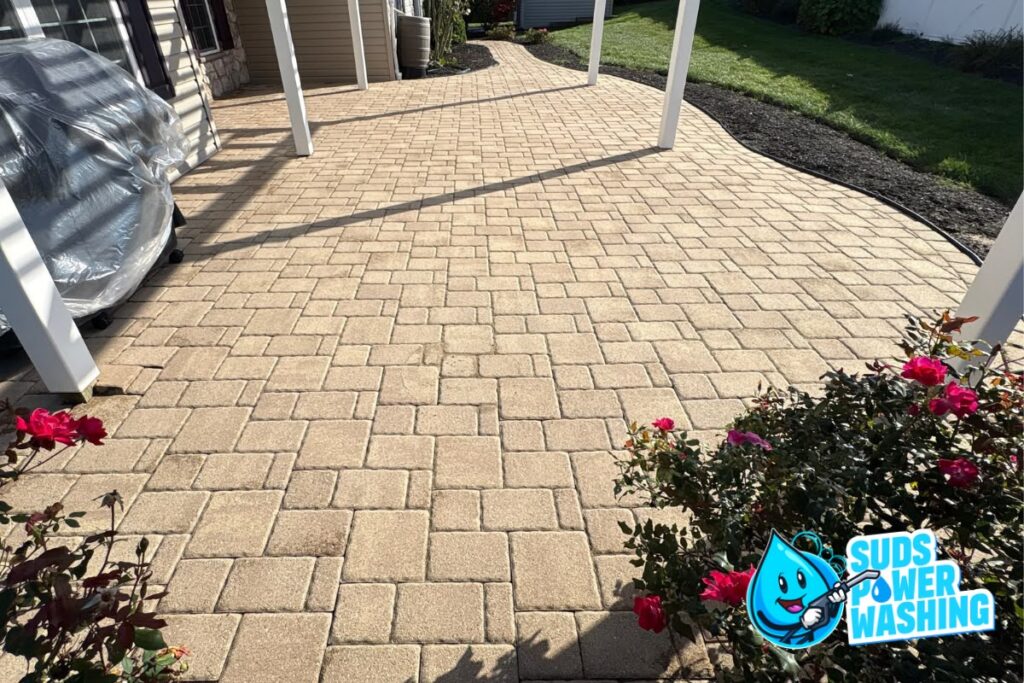
SUDs Power Washing provides professional patio cleaning service in Pennsylvania for residential properties with concrete patios, paver patios, brick patios, and natural stone patios and the most important thing most homeowners do not know before grabbing a pressure washer or booking a generic cleaning service is that different patio surfaces require different pressure levels, different cleaning chemistry, and different technique. The approach that produces a great result on a concrete patio can permanently damage a paver or natural stone surface. Patio cleaning is not a uniform job, and the right method depends entirely on what the patio is made of.
The patio has been sitting under the Pennsylvania winter since October. It is now April or May, the furniture is about to come out of the garage, and the surface is a combination of last autumn’s leaf stain, winter algae growth along the shaded edge, and a general grime that makes the whole thing look five years older than it is. The homeowner is calculating whether to buy cleaning solution at the hardware store, rent a pressure washer, or call someone who does this for a living. This article gives the framework for making that decision correctly before anything gets cleaned, and before anything gets damaged.
What does each patio surface material actually need and what happens when you use the wrong pressure or technique?
Concrete patios tolerate higher pressure cleaning (1,500 to 3,000 PSI) and respond well to pre-treatment degreaser for staining, but stamped concrete requires lower pressure (under 1,500 PSI) to avoid pattern damage. Paver patios require low pressure (under 1,200 PSI) combined with polymeric sand joint protection, because high pressure erodes the sand between pavers and creates weed infiltration pathways. Natural stone patios require the lowest pressure (under 800 PSI) and acid-neutral cleaning chemistry because acidic cleaners etch limestone, travertine, and sandstone surfaces permanently. Brick patios are durable but require fan-tip pressure direction that runs parallel to the mortar joints rather than across them to prevent joint erosion.
Concrete patios: durable but not damage-proof especially stamped concrete
Standard poured concrete is the most pressure-tolerant patio surface and responds well to pressure washing in the 1,500 to 3,000 PSI range. Pre-treatment with a surfactant or degreaser before pressure application improves results on stained or algae-covered concrete significantly. The chemistry does most of the cleaning work, and the pressure rinses it. The exception is stamped or patterned concrete; the raised texture concentrates pressure impact at pattern edges, and pressure above 1,500 PSI can erode the decorative surface over repeated cleaning cycles. If the concrete has a stamped or coloured finish, lower pressure with longer dwell time on surfactant is the correct approach rather than higher pressure applied to a more fragile surface detail.
Paver patios: the grout joint problem that consumer pressure washing reliably creates
Pavers are individual units of brick, concrete block, or natural stone set in a sand or polymeric sand bed with jointing material between each unit. Consumer pressure washing at 2,000 to 3,000 PSI applied to a paver patio does not just clean the surface it evacuates the sand or polymeric sand from the joints between pavers. Once the jointing material is gone, the patio becomes structurally unstable, pavers begin to shift and rock, and weeds find an accessible growth channel into the base layer. Professional paver cleaning uses lower pressure, directs pressure along the paver surface rather than into the joint lines, and applies polymeric sand restoration as a post-cleaning step. This is why paver patios specifically need professional patio cleaning service rather than generic pressure washing; the joint protection and restoration component is the difference between a patio that holds for another five years and one that needs relevelling within the next season.
Natural stone patios: limestone, travertine, and sandstone are pH-sensitive
Natural stone patio surfaces including limestone, travertine, sandstone, and bluestone are porous and pH-sensitive in ways that concrete and pavers are not. Acidic cleaning products, including muriatic acid-based concrete cleaners and some consumer pressure washing detergents, etch natural stone surfaces permanently on contact, creating a dulled, textured surface damage that cannot be reversed without professional stone restoration. Natural stone patios require low-pressure application (under 800 PSI), pH-neutral cleaning chemistry, and soft washing technique for biological contamination like algae and moss. This is the patio type most frequently damaged by homeowners who apply the same product they use on the concrete driveway without realising the chemistry is incompatible.
Brick patios: mortar joint direction matters more than pressure level
Brick is relatively durable and tolerates pressure in the 1,200 to 2,000 PSI range. The critical technique requirement for brick is pressure direction; the spray fan should run parallel to the mortar joint lines, not across them. Pressure directed perpendicular to mortar joints accelerates joint erosion and can displace mortar on older patios with soft lime mortar. Pre-wetting the surface before pressure application and using a wide fan tip (25 to 40 degree spread) reduces joint impact and produces a more even clean across the brick face.
Can you use bleach to clean a patio?
Diluted bleach solution works on concrete patios for killing algae and mold. It is effectively what professional soft washing uses at a controlled dilution. On natural stone, bleach accelerates surface deterioration. On pavers with polymeric sand joints, bleach can degrade the polymeric binder in the jointing material over time. On brick with lime mortar, repeated bleach application accelerates mortar degradation. The professional approach uses purpose-formulated biodegradable surfactants that treat biological contamination effectively across all patio material types without the material-specific risks that bleach creates when applied by a homeowner who does not know what is under the surface. The Family Handyman patio cleaning guide covers DIY approach for concrete patios adequately but the paver joint damage risk and natural stone etching risk from inappropriate chemistry are the pieces that require professional knowledge to navigate.
What does professional patio cleaning service deliver for pavers and natural stone that consumer pressure washing cannot?
Professional patio cleaning service delivers three capabilities for paver and natural stone patios that consumer pressure washing cannot replicate: pH-appropriate cleaning chemistry matched to the specific stone or paver material, controlled low-pressure soft washing technique (under 800 PSI for natural stone) that removes biological contamination without surface etching or joint erosion, and polymeric sand joint restoration for paver patios to reseal the joint material after cleaning. SUDs Power Washing provides professional patio cleaning in Pennsylvania calibrated to the specific surface material of each patio rather than applying a single pressure and product across every surface type.
pH-appropriate chemistry: why the product matters as much as the pressure
Consumer pressure washing detergents are typically formulated for general hard surfaces effective on concrete, adequate for brick, and inappropriate for natural stone. Natural stone surfaces require pH-neutral chemistry because any product below pH 7 (acidic) reacts with calcium carbonate in limestone, travertine, and marble, and any product significantly above pH 9 (strongly alkaline) can also affect stone surface integrity over time. Professional patio cleaning service uses chemistry selected for the specific surface of a different product for concrete, pavers, and natural stone because the right chemistry does more cleaning work at lower pressure than an inappropriate product applied at higher pressure on a sensitive surface.
Polymeric sand joint restoration: the post-cleaning service paver patios specifically need
Polymeric sand is the jointing material used between pavers in modern patio installations. Unlike regular sand, polymeric sand contains binding agents that activate with water to form a solid, flexible joint that resists weed growth and ant infiltration. Even at low cleaning pressure, some polymeric sand displaces during cleaning particularly in joints where the binding agent has degraded from previous seasons. Professional paver cleaning includes polymeric sand restoration as a post-cleaning step, resweeping fresh polymeric sand into the joints and activating it with water so the patio leaves the appointment in better structural condition than it arrived. This is the service component most homeowners do not know exists and that DIY patio cleaning cannot replicate.
Surface protection during cleaning: what adjacent materials need when the patio is cleaned
Patio cleaning happens in close proximity to garden beds, lawn edges, outdoor furniture, decorative planters, and in many cases exterior siding or windows. Consumer pressure washing applied by a homeowner frequently oversprays into garden beds (surfactants can damage plant tissue at concentration), blasts soil and mulch onto the cleaned surface, and forces cleaning solution against siding surfaces at angles that accelerate weathering. Professional crews manage spray direction, apply pre-rinsing to vulnerable adjacent surfaces, and sequence the cleaning and rinse to contain runoff away from lawn and garden areas. The vinyl siding on the house adjacent to the patio and the power washing equipment both respond differently; professional crews know which surfaces need protection during the patio cleaning sequence.
How much does professional patio cleaning cost in Pennsylvania?
Professional patio cleaning service in Pennsylvania in 2026 typically costs $100 to $300 for a standard residential patio, depending on patio size (square footage), surface material (natural stone and pavers cost more than plain concrete due to lower-pressure technique and additional dwell time), and whether polymeric sand restoration is included for paver patios. SUDs Power Washing provides written estimates before any appointment is scheduled the price confirmed at estimate is the price at completion, with no scope additions that were not in the original written quote.
What does a patio cleaning appointment from SUDs Power Washing involve and when is the best time to book in Pennsylvania?
A SUDs Power Washing patio cleaning appointment in Pennsylvania begins with surface assessment to identify material types and contamination zones, followed by appropriate pre-treatment application (surfactant for biological contamination, degreaser for staining), pressure or soft washing treatment at the correct PSI for the specific surface material, polymeric sand restoration for paver surfaces where applicable, and a final rinse that removes all product residue and treated contamination. The best time to book patio cleaning in Pennsylvania is April or May after the last frost, before peak outdoor entertaining season, and at the point when winter algae and biological growth is at its most visible and accessible for treatment.
Here is what the appointment day looks like in practice. Before the crew arrives: move furniture and planters off the patio surface, clear any loose debris, and note any specific areas of staining or concern. The crew assessment at arrival determines the product, pressure level, and dwell time sequence for each zone of the patio; biological growth areas receive surfactant first, stained areas receive degreaser, and the pressure sequence follows after dwell. For paver patios, polymeric sand restoration follows the rinse. A standard residential patio takes 60 to 90 minutes from setup to completion. The result is a patio at its original material colour and texture with clean grout lines, no biological growth, and for pavers resanded joints that hold until the next annual cleaning.
Pool deck cleaning follows the same material-specific approach and is often scheduled in the same appointment as patio cleaning for homeowners preparing the full outdoor space for summer. Concrete driveway cleaning rounds out the complete hardscape spring refresh for homeowners who want the entire outdoor hardscape addressed in a single visit.
How often should a patio be professionally cleaned in Pennsylvania?
Once a year in spring is the minimum for most residential Pennsylvania patios with normal biological contamination. Patios in heavily shaded areas, patios adjacent to trees with significant pollen or tannin drop, and natural stone patios in high-humidity zones benefit from twice-annual cleaning spring and late autumn. Paver patios with polymeric sand restoration should be cleaned annually to maintain joint integrity season to season. SUDs Power Washing offers recurring patio cleaning schedules for homeowners who want consistent results without managing the booking each spring.
The Patio Has Been Waiting Since October Let’s Get It Ready
The furniture is in the garage. The patio knows what it is: concrete, pavers, stone, or brick and each one needs a specific approach to come back to the surface it was when it was installed. The right chemistry, the right pressure, and the right technique for your specific material is what SUDs Power Washing shows up with.
Book a patio cleaning appointment with SUDs Power Washing and get the outdoor space ready for the season it was built for.