
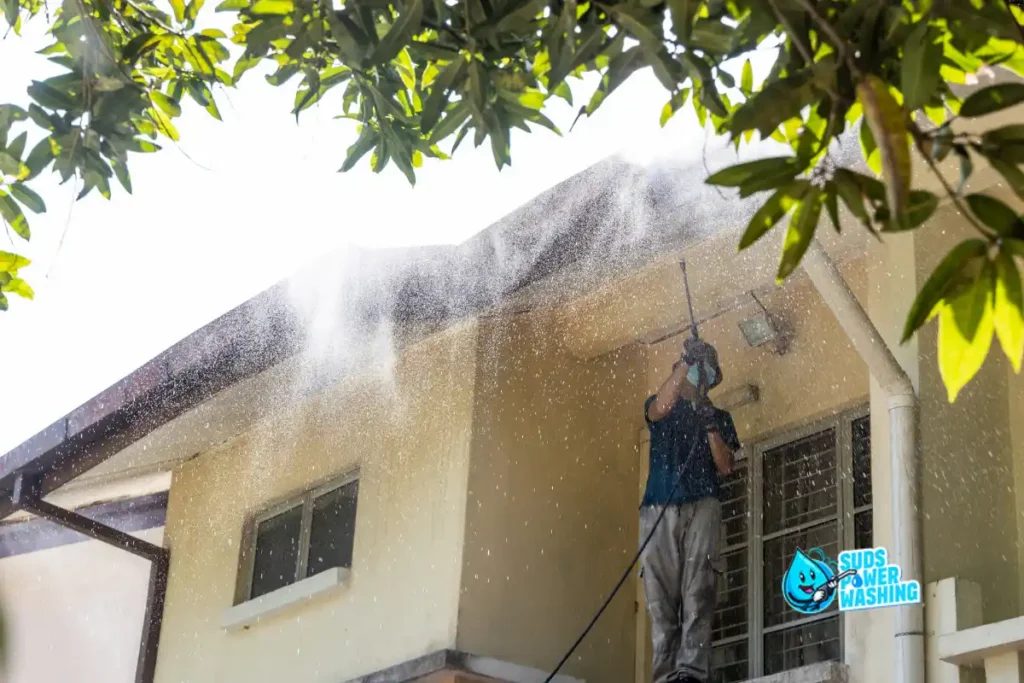
SUDs Power Washing provides soft washing services across Pennsylvania, covering roofs, painted siding, stucco, wood exteriors, and other surfaces that need a gentler cleaning method than standard pressure washing can safely deliver. The videos of pressure washing going wrong, paint peeling off walls, shingles lifting, stucco cracking under the force, are not staged. They are what happens when the wrong method gets applied to the wrong surface, and they represent a real concern for any Pennsylvania homeowner who wants a clean exterior without creating a new repair project in the process.
If your roof has dark streaks, your siding looks faded and grimy, or your painted exterior needs refreshing but you are nervous about what high-pressure water could do to it, the hesitation is reasonable. Soft washing exists specifically for these situations, and this guide covers what it actually is, which surfaces genuinely need it, and what the process looks like when done correctly.
In this article:
What surfaces actually need soft washing instead of standard pressure washing?
Soft washing is the correct method for roofs, painted wood, stucco, and delicate siding materials where standard pressure washing would damage the surface rather than simply clean it. For those surfaces, the chemistry of the cleaning solution is what removes the growth and grime, and low-pressure water is just the delivery and rinse mechanism.
The distinction between soft washing and pressure washing is not about how clean the result gets. It is about what the surface can safely handle. Concrete is dense enough to absorb significant water pressure without damage. A roof covered in asphalt shingles is not, and neither is a painted wood exterior or older stucco. Matching the method to the material is the part the viral disaster videos demonstrate getting wrong.
What is soft washing and how is it different from power washing?
Soft washing uses low-pressure water and a biodegradable cleaning solution to break down algae, mold, mildew, and organic grime at the chemistry level rather than the force level. The solution does the actual removal work. The water applies it and then rinses everything away afterward at pressure levels that are safe for virtually any exterior surface material. There are no PSI thresholds to worry about, no risk of surface damage from the water itself, and the cleaning result addresses the root cause of the growth rather than just rinsing the visible surface of it.
Standard power washing uses high-pressure heated water and relies on force rather than chemistry. That works well on hard, dense surfaces like concrete driveways and brick. It does not work well on anything more fragile, and for roofing specifically, it is the most common source of damage in cleaning jobs that go wrong.
Does my roof actually need soft washing?
Yes, and the roof is the single most important application for soft washing for most Pennsylvania homeowners. The dark streaks that appear on asphalt roofing over time are almost always Gloeocapsa magma, an algae species that feeds on the limestone filler in asphalt shingles and spreads across a roof surface if left untreated. It looks bad, but it is also causing gradual damage to the shingles themselves.
High-pressure washing removes the visible streaks but does it by lifting shingles, stripping the protective granule layer from the shingle surface, and forcing water into the spaces between roofing materials where it can create pathways for future leaks. The roof cleaning process using soft washing chemistry kills the algae at the source, rinses cleanly, and leaves the shingle integrity completely intact. The Asphalt Roofing Manufacturers Association specifically recommends low-pressure cleaning methods for asphalt shingles, which is the technical basis behind why soft washing is the standard professional approach for residential roof cleaning, not an alternative approach.
What about painted surfaces, stucco, or wood siding?
Painted exteriors, stucco, and wood siding are the other major soft washing candidates, and they show up in the disaster video category for the same reason as roofs: they are materials that were never designed to withstand the kind of force that residential power washing equipment can deliver. Paint peels or blisters when high-pressure water gets underneath it. Stucco cracks under direct high-pressure impact, particularly on older applications. Wood grain raises when hit with pressure that is too high, creating a rougher surface texture that actually holds dirt and moisture more readily than the original.
Soft washing addresses the algae, mold, and biological growth on these surfaces using the cleaning solution without putting any of those materials at risk. For wood siding and vinyl siding specifically, the soft washing approach is consistent with what most siding manufacturers recommend for professional cleaning to maintain the finish and not void any material warranties.
Do you actually need soft washing or is regular power washing fine for your property?
Most Pennsylvania homes need a combination of both methods rather than one or the other across the entire property. The roof, painted wood, and delicate siding need soft washing. The concrete driveway, brick walkway, and patio can typically handle standard power washing without any risk to the surface.
The decision is surface by surface, not property by property. A company that applies the same method to every surface on a property regardless of material is not making a professional judgment. They are making the fastest possible choice, and for some surfaces, the fastest choice is also the most damaging one.
How do I know which method my property actually needs?
The simplest way to think about it is asking what the surface is made of and whether it has a protective layer that high-pressure water could strip. Concrete does not have a protective layer in the way that an asphalt shingle does. Painted wood does. A stucco exterior does. Vinyl siding can be cleaned with low pressure safely, but the wrong angle and too much pressure can crack or dislodge panels.
Our soft washing services page breaks down which surfaces typically require this approach in the Pennsylvania market, and the assessment before any job starts is specifically designed to determine which method applies to each surface rather than defaulting to one approach.
How much does soft washing typically cost?
Soft washing for a comparable surface area often runs slightly higher than standard power washing because of the specialized cleaning solution involved. The difference is not an arbitrary markup. The solution itself has a cost, the application requires more careful technique and appropriate dwell time before rinsing, and the risk management involved in working on a roof or painted exterior is different from cleaning a concrete driveway.
For an accurate number based on your specific property and which surfaces need attention, a direct quote is the most reliable way to know what applies to your situation rather than working from a general range.
Can soft washing actually damage anything?
Soft washing carries far less risk than standard pressure washing for the surfaces it is designed for, but it is honest to say it is not entirely without downsides if done incorrectly. The cleaning solution needs the right concentration for the specific type of growth being treated, adequate dwell time to actually work, and thorough rinsing to remove residue completely. A company that rushes the dwell time or skips a proper rinse reduces the effectiveness of the treatment and can leave solution residue that attracts new growth faster than a properly rinsed surface would.
According to the Power Washers of North America, the professional standard for soft washing includes specific guidance on solution dilution, surface dwell time, and neutralising rinse procedures by surface type. That standard exists because soft washing done carelessly produces worse long-term results than soft washing done correctly, even if both look similar immediately after the job.
What does a professional soft washing service actually look like from start to finish?
A professional soft washing visit moves from surface assessment and buildup identification, through solution application and a timed dwell period, to thorough low-pressure rinsing and a final review before the crew leaves. The timeline is typically longer than a standard power washing job on a comparable area because the chemistry has to do its work before rinsing begins.
Knowing that sequence makes it easier to plan around the visit and understand why the job takes the time it does.
What happens during a professional soft washing visit?
The crew starts with an assessment of the surface type and what kind of growth or buildup is present, since algae, mold, mildew, and general grime do not all respond to the same solution or concentration. Once the surface and buildup type are identified, the appropriate cleaning solution is mixed and applied at low pressure across the full treatment area. The solution then sits for a specified dwell period, and this step is where the actual removal happens at the chemistry level. After the dwell time, the surface is rinsed thoroughly with low-pressure water to remove both the dead growth and any solution residue. A good crew does a final walkthrough of the treated area before packing up.
How long do soft washing results typically last?
Soft washing results for biological growth tend to last longer than standard rinse-cleaning because the solution kills algae and mold at the root rather than just rinsing the visible surface. On a Pennsylvania roof treated for Gloeocapsa magma, results typically hold for two to three years in most conditions, though properties with heavy shade and high ambient humidity will see regrowth develop faster than properties with more sun exposure.
For surfaces on the same property that are better suited to standard methods, like concrete driveways or brick patios, the power washing services page covers what that process typically involves and how it gets coordinated alongside a soft washing visit for a full property clean.
How do you find a soft washing company you can actually trust?
Look specifically for a company that understands the difference between soft washing and pressure washing rather than one that treats them as interchangeable. Ask whether they have experience with your specific surface type, particularly if the job involves roofing. Ask about the cleaning solution they use and whether it is appropriate for the specific material and growth type on your property. Ask whether they carry liability insurance for the work.
A company that can explain their solution choice, their dwell time approach, and their rinsing process without hesitation is a company that actually understands soft washing rather than one that has simply learned to call it that.
Clean Surfaces Without the Damage, That Is the Whole Point
The concern that brought most readers to this article is legitimate. High-pressure washing on the wrong surface creates damage that costs more to repair than the cleaning job itself. Soft washing exists because the alternative to aggressive cleaning is not no cleaning, it is smarter cleaning that gets the same result without putting the surface at risk to achieve it.
If your roof, siding, or painted exterior needs attention and you want to know which approach is right for your specific property, get a soft washing quote from SUDs Power Washing. The assessment comes before any commitment, and the recommendation will be based on what your surfaces actually need rather than what is fastest to deliver.